
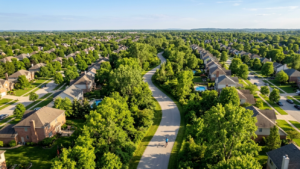
 Hilliard is one of Columbus’s strongest west-side suburbs for rental investment: top-rated schools, steady household demand, and a family demographic that tends to stay put. Here’s what investors need to know heading into 2026.
TL;DR
Hilliard’s rental market is driven by one factor above almost all others: the school district. Hilliard City Schools consistently rank in the top 30% of Ohio public schools, and family-oriented renters will pay a premium to stay in the district boundaries. Single-family homes rent for $2,100 to $2,700 per month depending on size and condition. Apartments run from $1,200 to $1,500 for most units. Vacancy is tight and turnover is low when rents are priced correctly.
Key Takeaways
- Hilliard City Schools serve over 16,000 students and rank in the top 30% of Ohio public schools, making school district access a primary driver of renter demand and lease renewals.
- Single-family rental homes currently average $2,100 to $2,700 per month; the overall median across all property types is approximately $1,850 as of mid-2026.
- Hilliard rents sit meaningfully below Dublin (approximately $1,786 median for apartments) while offering comparable school quality, creating a value proposition that attracts long-term family renters.
- Ohio prohibits rent control statewide and Hilliard has no source-of-income (SOI) protections as of mid-2026, giving landlords standard flexibility on screening and pricing.
- The spring and early summer window (April through June) consistently produces the fastest lease-up times in this market, driven by families moving before the school year begins.
In This Article
Why Hilliard Attracts Renters
Most Columbus suburbs can point to reasonable schools and convenient highway access. Hilliard can say both of those things and mean them in ways that actually move the rental market.
Hilliard City Schools serve over 16,000 students across 24 schools, and the district ranks in the top 30% of Ohio public schools on academic testing. Math proficiency runs 8 points above the state average; reading proficiency runs 7 points above. All three high schools (Davidson, Darby, and Bradley) consistently place in the top 25 to 30% of Ohio high schools. For families with school-age children, that matters. It translates directly into renter demand that holds up even when the broader Columbus market softens, and into tenants who actively avoid moving mid-year because it would disrupt their children’s schooling.
Hilliard’s school district drives consistent renter demand from families willing to pay above-average rent to stay in district boundaries.
The location reinforces the appeal. Hilliard sits approximately 12 miles west of downtown Columbus, with I-270 and I-70 intersecting within the city’s footprint. The commute to downtown Columbus runs 15 to 25 minutes in normal traffic. Dublin’s corporate campuses, including those hosting major employers along the Emerald Parkway corridor, are a quick 10 to 15 minute drive north. Ohio State University is within 20 minutes east. That access radius covers a significant share of Columbus’s professional workforce, which is exactly the renter profile most residential investors want.
Within the city, Old Hilliard’s walkable core along Main Street and Norwich Street provides the kind of neighborhood texture that attracts and retains renters. Station Park, the city’s central green space at the former railroad depot site, hosts outdoor concerts, a splash pad, and a farmers market during summer months. The Heritage Rail Trail extends seven miles through the city for biking and walking, connecting residential neighborhoods to Homestead Metro Park to the south. The city operates 27 parks and 41 miles of multipurpose trails in total. For a suburb of roughly 39,000 people, that’s a meaningful quality-of-life offering.
Retail and dining along the Cemetery Road corridor, the Mill Run shopping area, and the Hilliard Rome Road corridor give renters easy access to everyday services without requiring a trip into Columbus proper. The Franklin County Fairgrounds hosts major events throughout the year. Heritage Golf Club adds a scenic, established backdrop to the city’s southwest.
The demographic profile supports investment logic. Hilliard’s median household income is approximately $128,000, and the median age is 35.8 years. That combination (higher-income, family-age households) correlates with qualified tenant applications, on-time rent payment, and lease renewal. Over half of rental households in Hilliard include families with children. These are not transient renters. They are households seeking stability within a district they chose intentionally.
Rental Market Data (2026)
Apartment Rent Ranges
Apartment data is the most consistent cross-source figure for Hilliard, because the apartment stock (largely newer, purpose-built communities) provides apples-to-apples comparisons. RentCafe data as of early 2026 shows:
| Unit Type | Average Monthly Rent | Avg. Square Footage |
|---|---|---|
| Studio | $919 | 337 sq ft |
| 1 Bedroom | $1,221 | 709 sq ft |
| 2 Bedroom | $1,494 | 1,025 sq ft |
| 3 Bedroom (apartment) | $2,010 | 1,272 sq ft |
| Overall apartment average | $1,447 |
Year-over-year, Hilliard apartment rents are up approximately 2.4% from 2025. The largest share of rentals (62%) fall in the $1,001 to $1,500 per month range, reflecting the city’s concentration of 2-bedroom apartment stock.
Single-Family and Townhome Rents
Single-family homes are a different market. Apartments.com data shows the average single-family rental in Hilliard running approximately $2,659 per month, with active listings ranging from around $1,700 to $4,300 depending on size, condition, and neighborhood. Homes.com cites a May 2026 median of $2,425 across all home rentals. Zumper’s April 2026 data puts the all-property-type median at $1,850.
The practical range for investors targeting standard 3-bedroom single-family homes in Hilliard: expect $2,100 to $2,500 for well-maintained properties in established neighborhoods, with updated or larger homes in premium pockets (near Heritage Golf Club, in the Britton Parkway corridor, or in newer subdivisions to the northwest) pushing to $2,500 to $3,000 or above.
A well-maintained 3-bedroom home in a desirable Hilliard neighborhood can command $2,300 or more per month from family renters who plan to stay for years, not months.
How Hilliard Compares to Nearby Suburbs
Hilliard’s pricing sits at a notable discount to Dublin while drawing from the same employer base and school quality tier. Dublin’s apartment median runs approximately $1,786, compared to Hilliard’s $1,447 for apartment stock. For single-family homes, Dublin commands meaningfully higher rents, driven by newer luxury inventory and the premium attached to Dublin City Schools and the Dublin address itself.
Grove City, to the south, carries lower rent averages across all property types (roughly $1,200 per month for apartments per Columbus submarket tracking). Grove City also has a different school profile, which means the family renter demographic that drives Hilliard’s stability is less concentrated there.
For investors, this positions Hilliard as the strongest value proposition on the west side: Dublin-comparable renter quality and school-driven demand, at rents closer to the Columbus metro middle market. Properties that are genuinely rent-ready and priced accurately find qualified tenants without extended vacancy.
Vacancy and Lease Timing
Hilliard follows the same seasonal pattern as most Columbus family-oriented suburbs, with one seasonal peak that’s sharper here than in some other markets. The spring window (April through June) is the strongest leasing period in this submarket, and the school-year connection is the reason. Families who intend to move do so in time to get settled before school starts in late August. A property listed in May in Hilliard, priced correctly and in rent-ready condition, will typically see more qualified inquiries than the same property listed in November.
July and August remain active for family renters who waited too long and now face urgency. September through November slows considerably. December and January are the softest months in the Columbus market generally, and Hilliard is no exception. Properties that sit vacant through late fall face a harder path to placement until the following spring.
The practical implication for investors: plan your turns to be complete by late March or early April. A unit that becomes available in late winter is better listed immediately rather than sitting for several additional weeks of vacancy hoping for better timing. Days on market in Hilliard when properties are priced at market and rent-ready typically run in the 3 to 6 week range. [INTERNAL LINK: how long does it take to rent a property in Columbus]
Properties that come to market overpriced in a low-demand month absorb the cost twice: once from extended vacancy, once from the price reduction that eventually follows.
On tenant retention: the same school-year dynamic that drives spring demand also drives renewal behavior. Tenants in Hilliard who have children in district schools are highly motivated to renew rather than move their family mid-year. This makes Hilliard single-family rentals among the more renewal-friendly properties in the Columbus market. For investors focused on reducing turnover costs, that’s worth factoring into hold decisions. For current RLPM portfolio performance metrics including renewal rate data, see the live KPI scorecard.
What Investors Should Know
Property Types and Price Points
The Hilliard rental market is predominantly single-family homes and townhomes, with a meaningful apartment stock in newer communities along the I-270 corridor and the Britton Parkway area. For investors, the single-family and townhome segment is where the school-district premium shows up most clearly in rent. Families looking for long-term rentals want space, yards, and garage access, and they will pay more for those features in a school district they’ve chosen.
Purchase price points for investment-grade single-family properties in Hilliard typically start around $300,000 to $350,000 for older stock in established neighborhoods. Newer construction or larger homes in premium pockets push to $400,000 and above. Redfin’s September 2025 data showed a median sale price of $421,000 for Hilliard homes, though the market has continued to show movement since then.
At a purchase price of $380,000 and a monthly rent of $2,300, a Hilliard single-family rental produces a gross rent multiplier of approximately 13.8x and a gross yield near 7.3%. That calculation doesn’t include operating expenses, vacancies, or financing costs, so it’s a starting point, not a business plan. But it reflects a market where cash flow is achievable for investors who buy at reasonable prices and manage costs actively. [INTERNAL LINK: how to evaluate rental property investment returns in Columbus]
New Development and Market Trajectory
Hilliard’s population has grown approximately 6.6% since the 2020 census, reaching an estimated 39,000 to 39,600 residents in 2026. The city has grown at a rate that outpaces 76% of similarly sized cities over the past two decades. Unlike some Columbus suburbs that have plateaued, Hilliard continues to absorb residential development, particularly in the northwest and southwest quadrants of the city.
New construction activity in Hilliard is real but constrained by available land within the existing city boundaries. Most new single-family development occurs on infill sites or in smaller subdivision expansions rather than large greenfield projects. That supply dynamic is favorable for existing rental properties: it limits the volume of competing new inventory entering the market in any given year.
The city’s employment base is diversifying beyond Columbus commuter households. Hilliard’s own commercial corridors along Cemetery Road and Hilliard Rome Road host a growing number of businesses, retail employers, and professional services. That local employment, combined with the Dublin and downtown Columbus employer base accessible via I-270, gives the market multiple economic support structures rather than relying on a single industry.
Where RLPM’s Local Expertise Applies
Pricing a rental in Hilliard accurately requires more than a zip code. Rents within the same city vary meaningfully by neighborhood, condition, and proximity to school attendance zones. A property in the Alton Darby area near Homestead Metro Park may attract a different renter profile and command different rent than a comparable property in the Mill Run corridor near I-270. RLPM’s local team manages properties across the Hilliard submarket and produces data-driven rent analyses based on active comparable listings rather than broad-market averages. Properties are listed across 45+ platforms to maximize exposure, including Zillow, Trulia, and Apartments.com.
Rental Compliance Considerations
The following is informational only and is not legal advice. Laws change. Consult a qualified Ohio real estate attorney for guidance on your specific situation.
Ohio Statewide Framework
Rental properties in Hilliard are governed by the Ohio Residential Landlord and Tenant Act (ORC Chapter 5321). Key landlord obligations under Ohio law (as of mid-2026) include maintaining premises in a habitable condition, complying with applicable building and housing codes, keeping all electrical, plumbing, and HVAC systems in working order, providing adequate heat, and returning security deposits within 30 days of move-out with an itemized written statement of any deductions.
Ohio prohibits rent control statewide (per Senate Bill 352, enacted 2021), meaning no municipality in Ohio may enact rent control or rent stabilization ordinances. This includes Hilliard. Landlords may raise rent by any amount between lease terms, subject to proper notice.
Standard notice requirements for Ohio residential tenancies: 30 days’ notice to terminate a month-to-month tenancy, and 3-day written notice (3-Day Notice to Pay or Vacate) for non-payment of rent before filing for eviction in Franklin County.
Hilliard-Specific Considerations
As of mid-2026, Hilliard does not have source-of-income (SOI) protection ordinances, meaning landlords are not required to accept Section 8 vouchers or other forms of housing assistance as a condition of tenancy. Verify current status with the City of Hilliard directly, as municipal ordinances can change. Columbus city proper does have SOI protections, which is worth noting for investors who hold properties in both jurisdictions.
Hilliard properties are subject to Franklin County property tax assessment and Franklin County Auditor oversight on valuation. Investors should verify current assessed values and tax rates through the Franklin County Auditor’s office before closing on any acquisition.
Federal Fair Housing Act protections apply to all Hilliard rentals. Ohio’s Fair Housing Act adds state-level protections. Consistent application of screening criteria across all applicants is the most important compliance practice for landlords. [INTERNAL LINK: tenant screening and Fair Housing compliance for Ohio landlords]
Bottom Line for Investors
Hilliard is one of the more reliable west-side markets in Columbus for residential investors targeting family-oriented tenants and lower turnover. The school district is the anchor. Hilliard City Schools’ consistent academic performance creates genuine renter loyalty that shows up in renewal rates, lease-up speed during spring season, and above-average renter household incomes.
The market is not cheap to enter. Purchase prices have risen alongside the rest of the Columbus metro, and rent growth, while positive (up approximately 2 to 6% year-over-year depending on the data source and property type), has not kept pace with acquisition costs in every scenario. Investors need to run detailed numbers on individual properties rather than assuming the zip code alone guarantees cash flow.
The profile that fits Hilliard best: investors holding for 5 to 10 years or more, prioritizing tenant quality and low turnover over maximum short-term yield, with properties sized for family occupancy (3 bedrooms or more). Out-of-state investors looking for a Columbus suburb with established demand, strong schools, and professional-management-friendly properties will find Hilliard on a short list with Dublin and Westerville.
For a data-driven assessment of what your specific Hilliard property would rent for in today’s market, use the free rent evaluation below.
Get a Free Rent Evaluation for Your Hilliard Property
Find out what your Hilliard rental would list for today, based on current comparable data from the Columbus west-side market.
Or schedule a consultation · 614.725.3059
Frequently Asked Questions
What is the average rent in Hilliard, Ohio in 2026?
For apartments, the average runs approximately $1,447 per month across all unit types, with 1-bedrooms around $1,221 and 2-bedrooms around $1,494. Single-family homes average $2,100 to $2,700 per month depending on size and condition, with a broader overall median (all property types) of approximately $1,850 as of mid-2026.
Is Hilliard a good place to invest in rental property?
Hilliard is a strong market for investors targeting family-oriented tenants with a long hold horizon. The school district drives consistent demand and low turnover, and the city’s proximity to major Columbus employers provides a qualified applicant pool. Entry prices have risen, so individual property analysis is important.
How do Hilliard rents compare to Dublin and Grove City?
Hilliard rents sit below Dublin (apartment median approximately $1,786 vs. Hilliard’s $1,447) and above Grove City (apartment average approximately $1,200). Hilliard offers school quality comparable to Dublin at a more affordable rent point, which is a core part of its rental appeal.
What types of rental properties are most common in Hilliard?
Single-family homes and townhomes make up the majority of investor-owned rental inventory in Hilliard. Apartment communities (mostly 1- and 2-bedroom units in newer complexes) account for a significant share of the overall rental stock, but most individual investors purchase single-family homes in established residential neighborhoods.
Does Hilliard have source-of-income (SOI) protections for renters?
As of mid-2026, Hilliard does not have local source-of-income ordinances requiring landlords to accept housing vouchers. This differs from Columbus city proper, which has SOI protections. Verify current local ordinances directly with the City of Hilliard, as municipal policies can change.
When is the best time to list a rental property in Hilliard?
April through June produces the strongest leasing activity in Hilliard’s family-oriented market, driven by households moving before the school year starts. Properties that are rent-ready and priced accurately during this window typically see the shortest days on market. December and January are the slowest months.
What are the notice requirements for eviction in Hilliard / Franklin County?
Ohio law requires a 3-day written notice (3-Day Notice to Pay or Vacate) before filing an eviction complaint for non-payment of rent. The Franklin County Municipal Court handles the eviction process, which typically runs approximately 3 procedural steps and 6 weeks from start to possession. This is informational only; consult a qualified Ohio attorney for guidance on your specific situation.
Does Hilliard have rent control?
No. Ohio prohibits rent control statewide under legislation signed in 2021. No Ohio municipality may enact rent stabilization or rent control ordinances, and Hilliard has no local rent increase restrictions.
Sources & Suggested External Links
- RentCafe Hilliard Market Trends (2026) — Apartment rent data by unit type, historical trends, Yardi Matrix-sourced
- Hilliard City School District Profile (Public School Review, 2026) — Enrollment, test scores, district rankings
- Franklin County Auditor — Property tax records, assessment data, and ownership history for Franklin County properties
- Ohio Revised Code Chapter 5321 — Landlord and Tenant — Full text of Ohio’s residential landlord-tenant law
- RLPM Live KPI Scorecard — Current Columbus portfolio performance metrics including days on market, renewal rate, and occupancy