
 Central Ohio winters leave fingerprints on a rental property. The damage is rarely dramatic, but it’s almost always cheaper to find in May than to repair in August.
TL;DR
Spring maintenance on a Columbus rental property comes down to two passes: an exterior walk-through to catch what winter damaged (roof, gutters, foundation, walkways, landscaping) and an interior systems check to make sure HVAC, plumbing, electrical, and life-safety devices are ready for summer. Small problems found in May cost a fraction of what they cost as emergencies in July or November. The goal isn’t to fix everything; it’s to find what’s about to break.
In This Article
Exterior: What Winter Left Behind
Start outside. Most winter damage on Central Ohio rentals shows up at the building envelope, and exterior issues left unaddressed in spring tend to compound through the wet season.
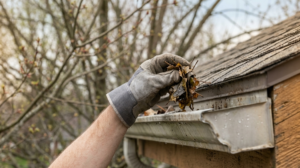
Roof and gutters. Walk the perimeter and look up. Lifted, cracked, or missing shingles are the most common winter casualty in Columbus, often the result of wind events or ice dam damage. Check that gutters are secure (no separation from the fascia), free of debris, and draining cleanly. Confirm downspouts direct water at least three to four feet away from the foundation. A blocked downspout in April is a basement seepage call in May.
Foundation and grading. Inspect the visible foundation for new cracks, particularly horizontal cracks or any crack wider than 1/8 inch (these are the ones that warrant a closer look). Check the soil grading around the house: ground should slope away from the foundation, not toward it. Frost heave can shift this over a single winter. Inside, scan basement walls and floors for water staining, efflorescence (white mineral deposits), or musty odors that signal seepage.
Walkways, driveways, and steps. Freeze-thaw cycles in Central Ohio create trip hazards every winter. Check sidewalks, porches, and driveways for new heaving, cracking, or settling. Trip hazards on tenant-accessible surfaces are a liability issue, not a cosmetic one.
Landscaping. Remove dead branches that could fall on the structure, vehicles, or walkways. Trim back any growth touching the siding or roof (vegetation in contact with the building accelerates rot and creates pest pathways). Refresh mulch, evaluate lawn recovery, and clear debris from window wells.
Exterior paint, siding, and caulk. Look for peeling paint, soft or rotting wood (especially around window frames and door thresholds), and failed caulking. Re-caulk gaps around windows, doors, and any siding penetrations. This is the cheapest weatherproofing a rental can get and it pays back through the next two seasons.
Spring maintenance isn’t about fixing what’s broken. It’s about finding what’s about to break.
Interior Systems Check
Once the exterior is documented, move inside. Spring is the window between heating season and cooling season, which makes it the right moment to verify everything mechanical works before tenants are calling on a 92-degree afternoon.
- HVAC. Schedule a spring service on the cooling system before the first hot day. Replace filters (or confirm tenants have done so). Test the AC by running it for at least 15 minutes and checking that supply registers blow noticeably colder air than return air. Listen for unusual sounds at the outdoor condenser. The single most expensive avoidable repair on a rental property is a compressor failure caused by neglected refrigerant or dirty coils, and a routine spring tune-up catches both.
- Plumbing. Check under every sink for slow leaks (a flashlight and a paper towel are enough). Run all faucets and check water pressure. Flush each toilet and watch for slow refill or running flappers. Inspect the water heater: look for visible corrosion, sediment leakage from the bottom, or signs of past flooding. Flush the tank if it’s been more than a year, or have the spring service technician do it.
- Smoke and carbon monoxide detectors. Test every unit. Replace batteries on units that take them. Any detector that’s 10 years old or older should be replaced regardless of whether it still beeps. Manufacturer guidance and Ohio fire code both treat the 10-year mark as the end of useful life. RLPM replaces detectors at this threshold across every property it manages.
- Electrical. Press the test and reset buttons on every GFCI outlet (kitchen, bathroom, garage, exterior). Check the breaker panel for any tripped breakers. Visually inspect any exposed wiring in the basement, attic, or utility area for rodent damage or signs of overheating (discoloration around outlets, warm cover plates).
- Appliances and dryer vent. Run the dishwasher and garbage disposal. Check the dryer vent: lint buildup is the leading cause of residential dryer fires, and the run from a basement laundry to an exterior wall is exactly where it accumulates. Clean the vent line annually if not more often.
Why Spring Is the Best Time to Catch Problems Early
Maintenance is cheaper when it’s optional. Every item on the list above costs a fraction of its emergency-call equivalent.
An HVAC tune-up scheduled in May runs a few hundred dollars and catches a refrigerant leak or worn capacitor before the system fails. The same call placed on a 92-degree day in July, with no AC, with a tenant calling on a Saturday, is a different conversation. Same compressor, same labor, but a planned service has become an emergency dispatch with weekend pricing and a tenant complaint attached.
The $200 HVAC tune-up in May prevents the $2,000 compressor replacement in July.
Spring also doubles as pre-leasing-season prep for any units that may turn. Rent-ready quality and lease-up speed are tied directly to the condition of the property at the moment it goes on the market. A unit walked, serviced, and corrected in April lists faster (and cleaner) in June than one that hits the photographer with deferred items still showing.
This is also where the gap between professionally managed and self-managed rentals shows up most clearly. RLPM’s quarterly property inspections catch the same items proactively across every plan, with smoke and CO detectors checked quarterly and replaced at the 10-year mark. In-house maintenance is billed at $84/hr plus a $15 trip charge, and the 24/7 emergency call center handles after-hours issues without the owner waking up to a phone call. Self-managing owners are responsible for catching all of this themselves, which is fine when it works and expensive when it doesn’t.
Frequently Asked Questions
How often should a Columbus rental property be inspected?
At minimum, twice a year (spring and fall). RLPM-managed properties get quarterly inspections, which is the standard most professional managers consider necessary to catch developing issues before they escalate.
Who pays for spring maintenance, the landlord or the tenant?
Routine maintenance and major systems servicing are landlord responsibilities under most Ohio leases. Tenant responsibilities typically include lawn care (where assigned in the lease), filter changes, and reporting issues promptly. The lease should make the split explicit.
Should the landlord enter the property to do spring maintenance?
Yes, with proper notice. Ohio law requires “reasonable” notice before non-emergency entry, generally 24 hours. The lease should authorize routine inspections and define how notice is delivered.
What’s the cost of skipping spring maintenance on a rental?
It varies, but the pattern is consistent: a $150 to $400 service call in spring becomes a $1,500 to $5,000 emergency repair in peak season. Compressor failures, water heater leaks, and roof leaks all follow this pattern.
Tired of being the one to remember spring maintenance?
RLPM’s quarterly inspections, in-house maintenance team, and 24/7 emergency call center handle this work proactively across every property we manage. Schedule a consultation to talk through how that would apply to yours.
Or get a free rent evaluation · 614.725.3059
Sources & Suggested External Links
- Ohio Department of Commerce — Division of State Fire Marshal — Ohio fire code and smoke detector guidance
- U.S. Fire Administration — Smoke Alarm Replacement Guidance — federal guidance on the 10-year replacement standard
- Inman — industry coverage of seasonal maintenance and rental operations
- U.S. Department of Energy — Maintaining Your Air Conditioner — manufacturer-aligned HVAC service guidance