
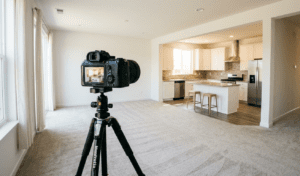
 Your property is empty. Every week it sits vacant costs you $300 or more in lost rent, and lowering the price feels like the only lever you have. It’s not. Here’s how Columbus rental owners fill vacancies faster without leaving money on the table.
TL;DR
The fastest way to fill a vacant rental in Columbus isn’t cutting rent; it’s pricing accurately from day one, listing on dozens of platforms (not just one or two), presenting a genuinely rent-ready property, and timing your marketing to the spring and summer demand surge. Overpricing by $100/month and sitting vacant for six weeks costs more than a full year of that “extra” rent would generate.
Key Takeaways
- A property priced $100/month too high that sits vacant six weeks loses more than the “extra” rent would have earned in an entire year.
- Listings with 10+ professional photos receive roughly 2.7x more inquiries than those with fewer than five, according to Apartments.com data.
- Listing on 45+ platforms (as RLPM does) generates dramatically more exposure than the 1–3 sites most self-managing owners use.
- May through August is the strongest leasing window in Columbus. A property that misses this window may sit weeks longer.
- If your listing gets zero inquiries after two weeks, the problem is almost certainly pricing or listing quality, not the market.
In This Article
Why Pricing Right Matters More Than Marketing Hard
Most owners who struggle with vacancy assume they have a marketing problem. In the vast majority of cases, they have a pricing problem. No amount of advertising will move a property that’s priced above what the market will bear for its location, condition, and size.
Here’s the math that makes this concrete. Say your property should rent for $1,400/month based on comparable listings in the area, but you list it at $1,500 because you want to cover a recent repair or because a neighbor told you their unit rents for more. That extra $100/month would generate $1,200 over a full year if the property were occupied. But if the overpricing causes the unit to sit vacant for six weeks, you’ve lost $2,100 in rent you’ll never recover. The “extra” rent doesn’t just fail to materialize; the vacancy it causes costs nearly double what the higher price would have earned.
Overpricing by $100/month and sitting vacant for six weeks costs more than a full year of that “extra” rent would generate.
Rent pricing is driven by a short list of factors: location, number of bedrooms and bathrooms, square footage, and condition. That’s it. Cosmetic upgrades (new backsplash, accent walls, trendy light fixtures) don’t meaningfully move the number. And your mortgage payment, property taxes, or recent renovation costs have zero bearing on what a renter will pay. The market doesn’t care what you owe on the property.
The best starting point is a data-driven rent evaluation based on comparable active and recently leased listings in your specific submarket. Not a Zillow estimate (which can be significantly off for Columbus neighborhoods), not a gut feeling, and not what a friend’s unit rented for two years ago. If you want to see where your property stands right now, RLPM offers a free rent evaluation that uses current local market data.
Where Your Listing Actually Needs to Be in 2026
Self-managing owners typically list their rental on one to three platforms: maybe Zillow, maybe Facebook Marketplace, maybe Craigslist. That approach worked a decade ago. In 2026, renters search across dozens of platforms, and the listing sites themselves use engagement signals (clicks, saves, inquiry volume) to determine how prominently your property appears in search results. A listing on one platform with mediocre photos is functionally invisible.
RLPM lists every property on Zillow, Trulia, Apartments.com, and 40+ additional rental platforms, plus the RLPM website. That breadth of distribution means qualified applicants find the property regardless of which platform they prefer. The difference in inquiry volume between a single-platform listing and a 45+ platform listing is not incremental; it’s an order of magnitude.
Why RLPM doesn’t use Craigslist
Craigslist remains one of the highest-risk platforms for rental fraud. The site doesn’t verify user identities, which makes it easy for scammers to hijack legitimate listings, post fake properties, and collect deposits from unsuspecting renters. For landlords, having your property appear on Craigslist (whether you posted it or a scammer copied your listing) creates brand risk and attracts a lower-quality applicant pool. RLPM made the decision to exclude Craigslist from its listing distribution for exactly these reasons.
Photos, descriptions, and amenity tagging matter more than you think
Apartments.com internal data shows that listings with 10 or more high-quality photos receive roughly 2.7 times more inquiries than listings with fewer than five. That single factor has a larger impact on vacancy length than which platform you choose. Professional photos don’t need to be expensive, but they do need to be well-lit, properly framed, and comprehensive (kitchen, bathrooms, living areas, bedrooms, exterior, and any standout features).
Descriptions should be detailed and accurate, not generic. “Spacious 3BR in great neighborhood” tells a renter nothing. Specific details (square footage, school district, proximity to employers, parking situation, pet policy, included appliances) help your listing show up in filtered searches and give prospective tenants the information they need to schedule a showing rather than scrolling past.
A listing with great photos on one platform will outperform a listing with bad photos on ten platforms.
What “Rent-Ready” Actually Means (And Why It Matters for Speed)
There’s a meaningful difference between a property that’s “available” and one that’s genuinely rent-ready. A rent-ready property is one where a qualified tenant could sign a lease today and move in this weekend with no surprises. Fresh paint, clean carpets, working appliances, functioning plumbing and HVAC, clean common areas, and a well-maintained exterior. The bar isn’t luxury; it’s confidence. A prospective tenant walking through a rent-ready property should feel like someone cares about this home.
Properties that look “mostly fine” lease slower. A stained carpet, a dripping faucet, or a patchy paint job might seem minor, but they signal to prospective tenants that the landlord cuts corners. In a competitive market, renters have options, and they’ll choose the property that feels taken care of over the one that feels neglected (even if the rent is slightly lower).
RLPM’s rent-ready standard exists for this reason. Every property is inspected before listing to confirm it meets a defined condition threshold. This protects the owner (faster lease-up, better tenants) and the tenant (clear expectations from day one). If your property isn’t there yet, the turnover cost article covers what a turn scope looks like and what it typically costs in the Columbus market.
The Spring Leasing Window in Columbus
If you’re going to have a vacancy, spring and early summer is when you want it. May through August is the peak leasing season in Columbus. More people are relocating for jobs, more leases are turning over, and more families are moving before the school year starts. The applicant pool is at its deepest, and well-priced, well-presented properties lease quickly.
The supply side is helping, too. New apartment construction starts in Columbus fell sharply over the past two years, dropping to their lowest levels in over a decade. That tightening pipeline means fewer competing units hitting the market in 2026, which supports faster lease-ups and stronger occupancy for existing properties. Average rents in Columbus are up approximately 2–3% year over year, and the market temperature is warm.
But timing only helps if you’re ready. A proactive approach (starting marketing before the current tenant moves out, having the turn scope planned, and having the listing drafted and photos scheduled) puts the property on the market days after move-out rather than weeks. A reactive approach (waiting until the unit is empty, then figuring out what needs to be done, then taking photos, then posting a listing) burns the best weeks of the leasing season.
Proactive leasing starts before the tenant moves out. Reactive leasing starts after you realize the unit is still empty.
For current data on RLPM’s lease-up times, occupancy rates, and days on market, visit the live KPI scorecard.
Red Flags That Your Marketing Isn’t Working
Vacancy marketing isn’t “set it and forget it.” If your property isn’t generating interest, something specific is wrong, and it’s almost certainly one of three things.
No inquiries after 1–2 weeks
This is a pricing signal, not a market signal. Columbus has strong renter demand. If qualified applicants aren’t reaching out, the rent is too high relative to what the property offers and where it’s located. The fix is a price adjustment, not more advertising spend.
Lots of views but no showings
People are seeing your listing but not taking the next step. This usually means the photos or description are creating a disconnect. Either the photos don’t match the rent (the property looks like a $1,100/month unit but is listed at $1,400), or the description is too vague to help renters self-qualify. Refresh your photos, add specifics to the description, and make sure the listing accurately represents the property’s condition.
Showings but no applications
People are visiting but not applying. This typically means the property’s in-person condition doesn’t match expectations set by the listing, or the showing experience itself is creating friction. Is the property clean and ready to view? Is access easy to schedule? Are there visible deferred maintenance issues that weren’t apparent in photos?
RLPM monitors listing performance actively and adjusts based on what the data shows. If a property isn’t getting traction within the first week, the team reviews pricing, listing quality, and presentation before the vacancy stretches further. That feedback loop is one of the most valuable aspects of professional management during a vacancy: decisions are data-driven, not emotional.
When to consider incentives (and when not to)
Move-in specials, reduced security deposits, or a free month’s rent can accelerate leasing in specific situations (off-season listings, properties in less competitive submarkets, or units that have been vacant 30+ days). But incentives should be a targeted tool, not a default strategy. If the property is well-priced, well-presented, and listed broadly during peak season, incentives shouldn’t be necessary. If they are, the underlying issue is usually price or condition, not a need for giveaways.
Frequently Asked Questions
How long does it typically take to lease a rental property in Columbus?
Lease-up times vary by location, property type, season, and pricing. For current averages, visit RLPM’s live KPI scorecard, which tracks days on market in real time.
Should I lower my rent if I’m not getting inquiries?
If your listing has been active for two weeks with minimal interest, a price adjustment is usually more effective than waiting. Even a small reduction ($25–$50/month) can meaningfully increase visibility and inquiry volume on listing platforms.
How many rental platforms should my property be listed on?
As many as possible. RLPM lists on 45+ platforms including Zillow, Trulia, and Apartments.com. Self-managing owners who list on only one or two sites are competing with a fraction of the exposure that professionally managed properties receive.
Do professional photos really make a difference?
Yes. Industry data shows listings with 10+ quality photos generate roughly 2.7x more inquiries. Professional photos don’t need to be expensive, but they need to be well-lit, properly framed, and comprehensive.
Why doesn’t RLPM list on Craigslist?
Craigslist doesn’t verify user identities, making it one of the highest-risk platforms for rental fraud. Scammers regularly hijack legitimate listings to collect fake deposits. RLPM excludes Craigslist to protect both owners and prospective tenants.
What’s the best time of year to list a rental in Columbus?
May through August is peak leasing season. Properties listed during this window typically lease faster and attract a larger, more qualified applicant pool. Off-season listings (November through February) may take longer and require more competitive pricing.
What if my property isn’t fully rent-ready yet?
Don’t list it until it is. Showing a property that’s “almost done” creates a poor first impression and can deter qualified applicants. Finish the turn, then list with strong photos of the completed unit.
Have a Vacant Property in Columbus?
Let’s talk about what it would look like to get your property leased with professional marketing, broad distribution, and data-driven pricing.
Or get a free rent evaluation · 614.725.3059
Sources & Suggested External Links
- RentCafe — Columbus Average Rent & Market Trends, 2026
- MMG Real Estate Advisors — 2025 Columbus Multifamily Forecast
- AllBetter — 14 Best Sites for Rental Property Listings (2026), citing Apartments.com photo data
- Zillow Rental Manager — Columbus Rental Market Trends
- FlagMyListing — Craigslist Rental Scam Verification Guide
- National Apartment Association — Vacancy & Turnover Cost Benchmarks
- RLPM Live KPI Scorecard — Current Performance Metrics