
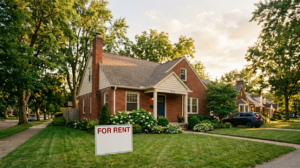
 You list the property, then you wait. Each day it sits empty is rent you will not get back. So how long should you actually expect to wait in the Columbus market right now?
TL;DR
Most Columbus rentals lease within a few weeks once they are rent-ready and priced to the current market. Nationally, the time from listing to a signed lease reached a record 41 days in early 2026 before easing. RLPM listings have typically leased faster, often in about two weeks. The biggest lever is not the market, it is your price. Check RLPM’s live KPI scorecard for the current average.
Key Takeaways
- Pricing accuracy is the single biggest factor in how fast a property leases. Overpricing extends vacancy more than any other variable.
- National list-to-lease time hit a record 41 days in early 2026, up from 26 days in January 2022 (Apartment List). RLPM listings have typically run well below that.
- You control four of the five lease-up factors: price, condition, listing quality, and the timing of your listing.
- A unit overpriced by $200 a month can lose thousands in vacancy before a tenant ever signs.
- For the current Columbus average, check RLPM’s live KPI scorecard rather than relying on a static national number.
In This Article
How Long Does It Take to Rent a Property in Columbus?
A rent-ready Columbus property priced to the current market usually leases within a few weeks. The exact number moves with location, condition, pricing, and the season, so a single citywide average only tells you so much.
For national context: the median time from listing a vacant unit to signing a lease stretched to a record 41 days in early 2026, according to Apartment List (as of January 2026). That is up from 26 days in January 2022, and it tracks a national vacancy rate that climbed to a record 7.3%. By late spring, list-to-lease time had eased back toward 30 days as renter urgency picked up. The takeaway for owners is that timelines have loosened, and a property that would have leased quickly two years ago may need sharper pricing today.
RLPM listings have run consistently below those national figures. In a normal market, RLPM properties have typically leased in roughly 10 to 14 days once rent-ready, and even through the recent slowdown have stayed closer to 20 to 25 days. Rather than anchor to a static number that ages out, RLPM publishes a live KPI scorecard with the current days-on-market average, updated in real time.
Static averages don’t tell your property’s story. Current data does.
The Five Factors That Determine Your Lease-Up Time
Two similar houses on the same street can sit for very different lengths of time. Five things explain most of the gap:
- Pricing accuracy. The number one factor. Overpricing keeps a unit empty longer than anything else, because the listing simply gets filtered out of the searches your best applicants are running.
- Property condition. Genuinely rent-ready leases faster than “mostly fine.” Deferred touch-ups, dated finishes, and a half-finished punch list all read as friction to a prospective tenant.
- Listing quality. Professional photos, a detailed description, accurate amenity tagging, and broad platform distribution decide how many qualified people ever see the property.
- Season. May through August is the fastest window in Central Ohio. November through February is the slowest, when fewer renters are moving.
- Location and property type. An urban-core unit near major employers behaves differently than one in an outer suburb, and a single-family home rents on a different rhythm than a multi-family unit.
Notice that four of those five are things you set before the sign ever goes in the yard.
What You Can Control and What You Can’t
The market moves on its own. You do not. Sorting the two is what keeps a property from sitting.
Within your control: the asking price, the property’s condition, the quality of the listing, and when you bring it to market. Outside your control: overall renter demand (which drove the recent national slowdown), interest rates, and the competing inventory down the block. You cannot change how many units your neighbors are listing. You can make sure yours is the one priced right, shown well, and ready to move into.
This is the real value of professional management: optimizing all the controllable factors at once, instead of fixing one and hoping. RLPM lists on 45+ rental platforms (including Zillow, Trulia, and Apartments.com), charges a $0 leasing fee on all plans, and prices each property against live market comps rather than a hopeful guess.
The biggest factor in lease-up time isn’t the market. It’s the price.
How Days on Market Affects Your Bottom Line
Longer days on market is not an abstract metric. It is lost rent, and it compounds fast. This is also why overpricing backfires: chasing a higher number on paper usually costs more in empty days than it ever returns in rent.
Take a Columbus single-family home that the market supports at $1,800 a month. Here is what happens when it is priced to that market versus pushed to $2,000 to “see what sticks.” Vacancy is valued at the realistic market rate of $60 a day in both columns, so the comparison is apples to apples.
| Scenario | Priced at market ($1,800) | Priced high ($2,000) |
|---|---|---|
| Days vacant before lease | 14 days | 75 days (60–90 range) |
| Rent lost to vacancy | $840 | $4,500 |
| Extra rent the higher price would earn | n/a | $200/month |
| Vacancy gap | $3,660 in lost rent | |
That $3,660 gap wipes out more than 18 months of the extra $200 a month, and it assumes a tenant eventually agrees to pay $2,000 (the same market that left the unit empty for 75 days just told you they probably won’t). The higher sticker price looks better on the listing and worse on the bank statement.
RLPM’s pricing approach is built to keep that gap from opening. Properties are priced in line with current market trends, not aspirational guesses, and a built-in reduction strategy drops the asking rent by $50 for each two weeks a unit sits vacant. The goal is steady: protect owners from the slow, expensive drip of an empty property.
An extra $200 on the listing can quietly cost thousands in empty days.
Frequently Asked Questions
How long does it take to rent a house in Columbus?
A rent-ready home priced to the current market typically leases within a few weeks. RLPM listings have historically leased in about 10 to 14 days in a normal market, and closer to 20 to 25 days during the recent slowdown. Check the live KPI scorecard for the current average.
What slows down a rental’s lease-up the most?
Pricing. An overpriced listing gets filtered out of the searches your strongest applicants run, so it sits while comparable, correctly priced units lease around it.
Is it better to price high and negotiate down?
Usually not. The extra rent rarely covers the cost of the added vacant days, and the longer a unit sits, the more its price has to drop anyway. Pricing to the market from day one tends to net more over the year.
Does the season really affect how fast my property rents?
Yes. May through August is the fastest leasing window in Central Ohio, while November through February is the slowest. If you can time a listing, peak season helps.
How does RLPM market a vacant property?
Listings go out to 45+ rental platforms with professional photos and thorough details, priced against live comps, with a $0 leasing fee on all plans and a reduction strategy if a unit lingers.
Wondering what your property would rent for today?
Get a free, market-based rent evaluation and a realistic lease-up timeline for your Columbus property.
Or schedule a consultation · 614.725.3059
Sources & Suggested External Links
- Apartment List, February 2026 Rental Market Recap: national list-to-lease time (41 days, January 2026) and vacancy rate data.
- RLPM Live KPI Scorecard: current days-on-market, occupancy, and lease-up metrics.
- NARPM: national property management association and industry benchmarks.