
 Columbus usually sees its first freeze in late October. The owners who get through January without a 2 a.m. no-heat call did their fall work in September and October.
TL;DR
Fall winter maintenance for a Columbus rental comes down to four jobs: service the furnace or heat pump, protect pipes from freezing, seal the exterior (gutters, roof, caulk, branches), and check smoke and carbon monoxide alarms. The normal first freeze at Columbus is October 27, so book furnace service by early October. Tell tenants what to watch for, and keep utilities on in any vacant unit.
Key Takeaways
- Columbus’s normal first 32°F freeze is October 27, with about a 10% chance it arrives by October 14 (NWS, 1991–2020).
- A furnace tune-up typically costs $130–$200; a new furnace averages $4,814 nationally (Angi, 2026).
- State Farm’s average frozen-pipe claim payment exceeded $30,000 from 2024 through mid-2025.
- Ohio landlords must keep landlord-supplied heating and plumbing in good and safe working order (ORC 5321.04(A)(4)).
In This Article
- When Should Columbus Landlords Start Fall Maintenance?
- HVAC: Prepare for Heating Season
- How Do You Keep Rental Pipes From Freezing?
- Exterior: Protect the Envelope Before the Snow
- Smoke and CO Alarms: Who Handles What?
- The Fall Checklist at a Glance
- What Self-Managing Owners Tend to Miss
- Frequently Asked Questions
When Should Columbus Landlords Start Fall Maintenance?
Start in September and finish by mid-October. The National Weather Service office in Wilmington lists October 27 as the normal first 32°F freeze at Columbus (1991–2020 data), with roughly a 10% chance of a freeze by October 14 and a 90% chance by November 7.
Two reasons to move early. HVAC contractors book up fast once the first cold night sends the whole metro to the thermostat, and Angi notes that off-season inspections tend to cost less. And caulking and exterior sealing go better on a mild October afternoon than in a November drizzle. Treat October 1 as the deadline for scheduling, not for finishing.
HVAC: Prepare for Heating Season
Under ORC 5321.04(A)(4), an Ohio landlord must keep the heating and plumbing fixtures the landlord supplies “in good and safe working order and condition.” Division (A)(6) adds “reasonable heat at all times,” with an exception when heat comes from equipment in the tenant’s exclusive control on the tenant’s own utility account. That exception covers the gas bill in many single-family rentals. It doesn’t cover the furnace. If you supplied it, keeping it running is your job.
Schedule a furnace inspection before temperatures drop
Per Angi’s 2026 cost guide, a furnace inspection averages about $100, and a tune-up runs roughly $130–$200. Gas units cost more to inspect because the technician should test for carbon monoxide. Meanwhile, a new furnace averages $4,814, with most installs between $2,823 and $6,896.
A tune-up won’t save a furnace at the end of its life. It will find the cracked igniter or dirty flame sensor in October instead of on the coldest weekend in January, when the emergency call and a hotel for your tenant land on the same invoice.
A furnace tune-up runs $130 to $200. A new furnace averages $4,814. October is the cheaper month to find out which one you need.
Filters, thermostat, pilot lights
Put in a fresh filter, leave spares with the tenant, and write the filter size on the furnace cabinet. Run the heat through a cycle and listen for banging or squealing from the blower. A burning-dust smell on the first run is normal; a gas smell means leave the house and call the gas utility from outside. Swap the thermostat batteries too. A dead AA reads as a dead furnace to most tenants.
Most newer furnaces use electronic ignition, but older furnaces and many tank water heaters in Columbus’s pre-1990 housing (the brick doubles in Linden, the ranches in Whitehall) still run a standing pilot. Look for a steady blue flame. A yellow, flickering one is a reason to call a technician.
Heat pump pre-winter maintenance
Newer builds in Dublin, Powell, and Delaware County often run heat pumps. The U.S. Department of Energy recommends changing filters about once a quarter, clearing leaves from around the outdoor unit with the fan power off, and professional service at least once a year, including a refrigerant-charge check.
How Do You Keep Rental Pipes From Freezing?
Frozen pipes are the most expensive winter problem most small landlords face. State Farm reported in January 2026 that it paid over $628 million on more than 20,000 frozen-pipe claims from 2024 through June 2025, with an average payment above $30,000. That’s one insurer’s data, and your deductible and policy shape your own exposure. A burst line in a finished basement becomes a flooring, drywall, and displaced-tenant problem fast.
Insulate exposed pipes and shut down spigots
Walk the property with a flashlight. Look for supply lines in crawl spaces, unfinished basements along exterior walls, attached garages, and sink walls on the north side. Foam sleeves handle most of these; pipe-rated heat tape is worth it for a line that has frozen before. Seal the gaps at rim joists and utility penetrations where cold air gets in.
Disconnect garden hoses (a hose left on traps water, even in a frost-free spigot), close any interior shut-off to the exterior faucets, and open the outside tap to drain the line. Tenants rarely do this on their own.
Tell tenants which pipes are vulnerable
Your tenant is home on the January night the temperature drops to single digits. You aren’t. Send a short fall letter covering State Farm’s prevention steps: keep the heat at 55°F or higher, open sink cabinets on exterior walls during cold snaps, and let faucets drip on the coldest nights. Name the risk spots in that house (“the kitchen sink on the back wall”) and where the main water shut-off is. The Columbus rental lease checklist covers putting tenant responsibilities in writing.
Keep utilities on in vacant units
A vacant unit in December is the likeliest place for a burst pipe: nobody running water, nobody noticing a cold room, and sometimes the gas shut off to save a few dollars. RLPM keeps utilities active during vacancy for this reason (turnover work, showings, and winter protection). A month of gas and electric on an empty unit is a small line item next to one water claim.
Most burst pipes start as an uninsulated line in a crawl space that nobody looked at in October.
Exterior: Protect the Envelope Before the Snow
Central Ohio winters are more freeze-thaw than deep freeze. Snow melts on a 38°F afternoon and refreezes overnight, again and again, and that cycle finds each weak spot in a roof or wall.
Gutters, downspouts, and ice dams
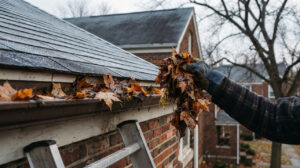
Clean gutters after most leaves are down, which in Worthington, Bexley, and other mature-tree neighborhoods usually means November. Make sure downspouts discharge several feet from the foundation.
On ice dams, the common advice is half right. The National Weather Service recommends clean gutters, but it points to attic insulation and soffit-to-roof ventilation as the main prevention: heat escaping through the attic melts snow on the upper roof, and it refreezes at the colder eaves. Clogged gutters make it worse. A house that dams up each winter needs attic work.
Ice dams start in the attic. Clean gutters help, but a house that dams up each winter needs insulation and ventilation.
Roof, caulk, and branches
From the ground with binoculars, look for missing or curled shingles and lifted flashing around chimneys and vents. Then caulk gaps around window and door trim, replace flattened weatherstripping, and seal where siding meets the foundation. A drafty door in a 1920s Clintonville house is often the difference between a tenant who renews and one who spends February with a space heater.
Cut back limbs that overhang the roof before ice season. For branches near power lines, call AEP Ohio rather than sending your own crew near energized lines.
Smoke and CO Alarms: Who Handles What?
Heating season is carbon monoxide season: furnaces and water heaters run hard and windows stay shut.
What the codes say (as of October 2026)
In Columbus, City Code Chapter 4529 governs smoke detectors. Section 4529.08 requires hard-wired detectors in one- to three-family buildings built after April 26, 1978 (battery-only units are permitted in older ones), and Section 4529.11 puts operation and maintenance in one- to three-family dwellings on the occupant. Statewide, the Ohio Fire Code (OAC 1301:7-7-11) addresses smoke alarms in existing buildings at §1103.8 and CO alarms at §1103.9, with §915 setting the triggers (fuel-burning appliances and attached garages are the common ones). ORC 5321.04(A)(1)–(2) requires landlords to follow applicable safety codes and keep the premises fit and habitable.
This is informational, not legal advice. Requirements depend on building age, location, and occupancy, so confirm yours with the Columbus Division of Fire or an Ohio attorney.
The practical approach
Even where the code puts battery checks on the tenant, a dead detector in your rental is still your problem. Test each smoke and CO alarm in the fall. The U.S. Fire Administration recommends monthly tests, a new battery at least once a year, and replacing smoke alarms 10 years after the manufacture date. Have the HVAC technician confirm the furnace flue is venting properly, and make sure the tenant has current emergency numbers, including the after-hours maintenance line.
On fire extinguishers, the Columbus Division of Fire’s fire-safety sheet for rentals lists them as a landlord item, but it’s written broadly (it also covers short-term rentals and buildings with common areas). Confirm with the Division of Fire whether one is required in your single-family or duplex. Providing one and checking its gauge each fall is sensible either way.
Then remind the tenant in writing to test alarms monthly and report any chirping right away. RLPM checks smoke and CO detectors at each quarterly inspection and replaces any that are 10 or more years old.
The Fall Checklist at a Glance
“Pro” means a licensed contractor or your manager’s maintenance team.
| Task | Why It Matters | When | Who |
|---|---|---|---|
| Furnace or heat pump tune-up | Finds failing parts and CO issues before peak demand | Book in September | Pro |
| New filter, thermostat batteries | Prevents strain and false “no heat” calls | Early October | Owner, then tenant |
| Insulate exposed pipes; seal gaps | Frozen-pipe claims can reach five figures | Before October 27 | Owner or pro |
| Disconnect hoses; drain spigots | Trapped water splits the line | Mid-October | Owner or tenant |
| Tenant winter prep letter | Tenants are home when pipes freeze | Mid-October | Owner |
| Utilities on in vacant units | Unheated vacancies freeze first | All winter | Owner |
| Clean gutters; extend downspouts | Clogs worsen ice dams and wet basements | After leaf drop | Pro |
| Roof, flashing, caulk, weatherstripping | Freeze-thaw turns small gaps into leaks | October | Owner or pro |
| Trim branches over roof | Ice-loaded limbs damage roofs | October–November | Pro (utility near lines) |
| Test smoke and CO alarms | Heating season raises CO risk | October, then monthly | Owner, then tenant |
For the warm-weather half of the year, the spring maintenance checklist for Columbus rentals picks up where this one leaves off.
What Self-Managing Owners Tend to Miss
Most owners with a few rentals know the furnace needs attention. What slips is the work that’s out of sight, or that only goes wrong in a hard winter.
Gutters. Nothing looks wrong in October. The cost shows up in February as a water stain on a bedroom ceiling, and the repair involves drywall and paint, not a ladder.
The crawl space pipe. Owners who haven’t crawled under their own rental often don’t know a supply line runs along the cold side. They find out the morning after a single-digit night.
Furnace service pushed to “next month.” The furnace works in October, so the tune-up waits. Then the first cold snap hits, HVAC companies across Franklin County have waitlists, and a mid-winter failure means an emergency call, peak-season replacement pricing, and space heaters or a hotel for the tenant.
Tenants can’t report a problem they don’t know to look for. The fall letter is part of the maintenance plan.
Fall problems are cheap to find and expensive to discover. That’s the logic behind RLPM’s quarterly property inspections, which cover detectors, appliances, tenant responsibilities, liabilities, and overall condition, so a sagging gutter shows up on a report before it shows up as a claim. RLPM’s in-house team handles winterization at $84 per hour plus a $15 trip charge and materials, and a 24/7 emergency call center (weekends and holidays included) takes the no-heat call when it comes. For a 20-year-old furnace that needs another repair, see when to replace vs. repair a rental appliance, and the reserve fund guide explains why six months’ rent in reserve keeps a January replacement from becoming a crisis.
A rental that enters November with a serviced furnace, insulated pipes, clean gutters, and a tenant who knows where the water shut-off is tends to reach March with nothing worse than a filter change.
Frequently Asked Questions
When should I winterize my rental property in Columbus, Ohio?
Schedule the work in September and finish by mid-October. The normal first 32°F freeze at Columbus is October 27.
Is a Columbus landlord responsible for furnace maintenance?
If you supplied the furnace, generally yes: ORC 5321.04(A)(4) requires landlord-supplied heating equipment to be kept in good and safe working order (general information as of October 2026, not legal advice).
How much does a furnace tune-up cost?
Angi’s 2026 data puts a tune-up at roughly $130–$200, with inspections averaging about $100.
What temperature prevents frozen pipes in a rental?
State Farm recommends keeping the heat at 55°F or higher, including in vacant units.
Who changes smoke detector batteries in a Columbus rental?
Columbus City Code 4529.11 places maintenance on the occupant in one- to three-family dwellings, but owners should still test alarms at each inspection and remind tenants to test monthly.
Do clean gutters prevent ice dams?
They help, but the National Weather Service points to attic insulation and ventilation as the main prevention.
Go Into Winter With a Plan
Talk with RLPM about quarterly inspections, in-house maintenance, and a 24/7 emergency line for your Columbus rentals.
Or get a free rent evaluation · 614.212.6903
Sources & Suggested External Links
- NWS Wilmington: Fall Frost/Freeze Climatology: Columbus freeze dates
- Angi: Furnace Inspection Cost: 2026 inspection and tune-up pricing
- Angi: New Furnace Cost: 2026 replacement pricing
- State Farm Newsroom: frozen-pipe claim data and tips
- U.S. Department of Energy: heat pump maintenance
- NWS: Preventing Roof Ice Dams: causes and prevention
- U.S. Fire Administration: smoke alarm maintenance
- Columbus City Code Chapter 4529: smoke detectors
- OAC 1301:7-7-11: Ohio Fire Code, existing buildings
- ORC 5321.04: landlord obligations
- Columbus Division of Fire: rental fire-safety sheet